


GIGPIG INTERVIEWS: ELLIOTT LION
As far as first gigs with a new band go, taking to the stage in front of 80,000 people is pretty much the ultimate acid test. But given everything that had gone before in Elliott Williams鈥� career, from touring across Europe in a windowless, doorless Post Office van to character building, rain drenched misadventures in Poland, the self proclaimed 鈥楧J and party starter鈥� and 鈥榩art time musician, full time magician鈥� was more than ready to take on all comers when he joined Editors 10 years ago.
Elliott, who also goes by the stage name Elliott Lion, can be found filling dance floors as a DJ when he鈥檚 not filling festival spaces as one sixth of Birmingham鈥檚 premiere post-punk outfit. But while he came on board as Editors鈥� keyboardist three albums in - with a litany of successes already amassed under their belts - Elliott has taken the last dozen years in his stride.
Sequestered in the back corner of the iconic Mulligan鈥檚 Pub, located just off the main stretch of Manchester鈥檚 Deansgate, perfectly poured Guinness in hand, Elliott regales 精东传媒 with pre-Editors stories that are hilarious as they are anarchic. Those early touring days, beginning as a fledgling 16-year-old, shaped and prepared Elliott for an industry that has challenged every step of the way and continues to do so for countless aspiring artists.
The problems faced by Elliott over almost two decades in the business either still exist or have evolved into something different entirely, but are still problems all the same. Whether they boil down to dodgy label and venue owners and opportunistic booking practices, minuscule pay offs and wider issues regarding streaming and the future of live venues in general.
Yet here Elliott sits, surviving and thriving (sounds a TINY bit Linkedin that, doesn鈥檛 it? Sod it, we move) while passionately explaining the pitfalls faced by jobbing musicians and how his own career has evolved along the way, from those freezing cold drives across the continent to worldwide euphoria and the intimate joy (steady on) derived from his own DJ sets.
Soundtracked by the ever reliable playlist of non-stop bangers on the Mulligan鈥檚 speakers (a big fat yes for REM into Madness into The Police into The Waterboys. Forever and always), Elliott put the world to rights over our hour long chat, so here鈥檚 what he had to say about the journey so far.
GIGPIG: When you first started gigging, how difficult was it to get booked? What were the biggest hurdles you faced and do you believe those problems still exist today?
ELLIOTT LION: I was in a band when I was 16, we were based out of Manchester, called Airship. And it was incredibly hard. And it was incredibly corrupt, because the way you got a lot of gigs then was you鈥檇 have local promoters who would get you a gig on the basis of how many tickets you sold. So at college that was fairly easy to go and sell, say, 50 tickets. But you never saw any of the money from the promoters or anything. It was like pay to play, really. In Manchester that seemed to be how everyone started. And not all promoters are bad like that, but when you鈥檙e young and you want to become a musician so badly you鈥檒l do anything to get there. A lot of promoters really preyed on that. I鈥檓 sure that still happens now.
GP: You joined Editors after their third album came out. How different was it being in a band as successful and well known as them compared to being in aspiring groups trying to make a name for yourself?
EL: It was pretty crazy. The band that I鈥檇 been in before, we鈥檇 got to a pretty decent level. We鈥檇 released an album and toured with bands like Biffy Clyro and Editors as well. So the transition was obviously very different but it was also a world that I was semi-aware of. Being on those tours made it a bit easier. But yeah, one of the first gigs I ever played we headlined a festival to 80,000 people, so I鈥檓 not sure if anything can ever prepare you for that level of intensity. But yeah, it鈥檚 been a good 10 years now and we鈥檝e made four records together, so it鈥檚 been good.
GP: Where are some of your favourite cities and venues to play in across the UK? And the rest of the world, for that matter?
EL: In the UK I grew up in Manchester so it鈥檚 always going to be a soft spot for me and it鈥檚 been particularly good for Editors. Glasgow, man, it鈥檚 got a vibe. The Barrowlands, we always play there. It鈥檚 a legendary place. It鈥檚 not changed in forever and it always feels like you鈥檙e doing a proper gig. It鈥檚 got that aura that places like the o2 places don鈥檛 have.
Across Europe they have so many independent venues that treat you so well and their infrastructure is so much better, especially in terms of catering. They really look after the bands. They try and sort out their backstages whereas a lot of the UK venues are pretty soulless and pretty horrible. I mean obviously there are still plenty of brilliant indie venues but on a much smaller level like the Brudenell Social Club in Leeds is fantastic and then here in Manchester, the Deaf Institute has always been amazing, then there鈥檚 Night and Day and a few others.
GP: What advice would you give to any aspiring artists and bands looking at getting into the industry today?
EL: I think the rules have kind of changed a bit with streaming and obviously touring鈥檚 become a lot harder due to Brexit. Back when I was like 17 or 18, we could get offered a gig in Belgium or the Netherlands for 拢250 and we鈥檇 jump in a van and go and play it. Whereas now I don鈥檛 think you鈥檇 cover your petrol with that, let alone the fee you鈥檇 have to pay to get through the border. I think that鈥檚 very sad.
Costs have risen massively across the entire industry. You can see this in ticket prices. These major arena shows, some of the ticket prices are astronomical. And I get that there is a push on artists and the bottom line has got tighter, but there is a certain amount of greed going around. This especially makes it harder for younger artists because their fees haven鈥檛 really changed to help cover these costs.
Advice for anyone now is to try and build your own kind of cult following and community around your music and you鈥檝e got more ways to do that now than I did when I was younger. There used to be so many middlemen involved to get you onto the radio or the right places or whatever. Whereas now you can just put something out and have a moment, but it鈥檚 about engaging with your audience and maintaining that audience and hoping that they鈥檒l go on a journey with you. So just be true to who you are and build your own following off the back of that
GP: What鈥檚 the biggest evolution you鈥檝e seen in the business during your years as a musician?
EL: Streaming, massively. By a million miles. What it鈥檚 done is it鈥檚 made it really hard to have collective, communal moments any more. When I was growing up a band would connect with you on the radio and it would be a cross section from young people to old people. There would be these mass communal moments but now these moments get slightly further apart. Lewis Capaldi鈥檚 been good at doing it recently but there鈥檚 not many more I can think of who have that sort of cross generational pull.
I can鈥檛 really see where the next Oasis is coming from any more. People seem to be big but big within their own cult without everyone knowing about them. So you can headline your own arena tours but then you get to a festival and only half the people there have heard of you. Which is kinda mad and must make festival booking a lot trickier because you look at a line up and you don鈥檛 know who a lot of the acts are, but that鈥檚 because people are listening to their own specific playlists and not albums any more.
The listening space used to be much more public, like the radio or MTV or something. It would be something the majority of people were tuned into. Now it鈥檚 much more of an individual thing rather than a collaborative effort.
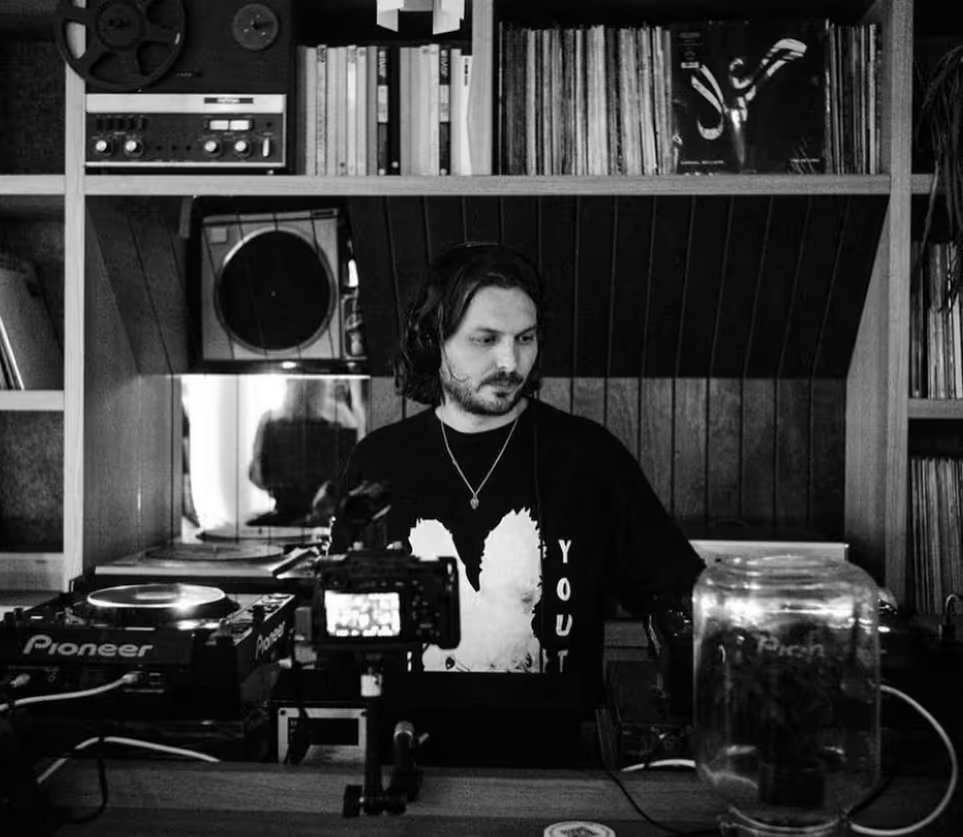
GP: When you鈥檙e on your own DJ鈥檌ng, how do you prepare for a gig as opposed to what you would do as part of Editors where there鈥檚 six of you on stage?
EL: They鈥檙e two very different concepts. The band is much more of a show where you know precisely what you鈥檙e going to do every night. Some things change between each night but it鈥檚 always Editors songs. But DJ鈥檌ng I play across a lot of genres and create more of a narrative with my set. Especially playing for a long time, like a six hour set, you can really take people on a journey through your musical brain. And throw in a lot of curve balls.
GP: What鈥檚 the weirdest song you鈥檝e ever played?
EL: Oh, I鈥檝e played loads of weird stuff. I did a really long set one time where I threw some M People in there and it totally went off. But I鈥檝e always loved DJ鈥檚 who do stuff like that where they build towards one thing, but then go in a different direction and it feels like such a release of euphoria because no one saw it coming.
GP: What makes a perfect venue for you?
EL: The people. Good people. People who work in the venues, especially when you鈥檙e starting out, looking after you. Across Europe you get a lot of venues who do really good catering and when you don鈥檛 have a lot of cash and can鈥檛 properly afford to eat, it does really make your day. This is something the UK has missed the boat on for years, but when you have hospitality like that it makes all the hard stuff kinda worth it.
Good staff and good set ups with attention to sound and to details, is always appreciated, especially if the backstage is nice and the staff give you free booze, that鈥檚 always great.
GP: With so many independent venues struggling to stay above water at the minute, what do you think can be done to help them out?
EL: I think it鈥檚 tough for everyone at the moment. It鈥檚 so hard out there. I think venues can try to help themselves by putting together great bills and having great bands on to help get people through the door. In turn I think that will be reciprocated by the public who will want to go and see great music. There鈥檚 no doubt it鈥檚 not easy for anyone. But like I said before I think this is also a top down problem where you鈥檝e got major artists charging 拢250 a ticket to go to their massive stadium show and you鈥檙e buying two tickets, a hotel for the night, travel, food, drink and everything else. You鈥檙e probably looking at around a grand in expenses. That鈥檚 like a holiday for a lot of people.
This takes money out of the middle market and the lower market because everyone wants to go and see the major artist. There鈥檚 a one upmanship of everyone trying to make the biggest show possible, the most fireworks and I kinda think, if you鈥檙e an artist you should be able to perform just as you and in reality that will make your concert ticket a lot cheaper and it鈥檒l be better for everyone.
Ticketmaster and these other ticket companies have set up this ticket pricing structure that just baffles me. They鈥檝e been able to erase some of the nature of touting by creating this mad ticket market where you can pay thousands of pounds to see Taylor Swift or Bruce Springsteen or Beyonce. To me it鈥檚 madness. Either you鈥檙e so wealthy it doesn鈥檛 matter or you鈥檙e so desperate and such a big fan of the artist that you鈥檒l pay anything to see them and I just feel both of those things are morally wrong.
GP: What鈥檚 a story that sums up life on the road for you?
EL: Before I was in Editors, I was in one of my old bands and we had an old Post Office van that we managed to scrape enough money together to buy. And this allowed us, if we were ever offered a gig in Europe, to just hop in the van and head off to the gig. We鈥檇 live off a packet sandwich between five of us and sleep in the van to save money.
We played a gig in Amsterdam. We finished the gig, loaded the van up and then went back into the venue to get the money. When we came out somebody had tried to break into the van but they鈥檇 done a botched job. They鈥檇 put the front window through and smashed the lock in and the back lock in, so they didn鈥檛 get in. So we had a door that was just open and a broken window and we had a show in Germany the next day.
So we decided that we were gonna try and do the show so we got someone from the venue to get a saw and we sawed through the front of the splitter to the back so we could get through to the back door to get the gear out. And instead of going to the hotel, because we couldn鈥檛 leave the van as it was unlocked, we just drove all the way to Germany through the night. Bless Tom, he was the only one not drinking so he had to drive the whole way with the window open. I did wake up in the morning and he was asleep on the hard shoulder.
We played the festival and then had to drive all the way back from Germany to the UK, without being able to stop anywhere because we couldn鈥檛 leave anything in the van.
Another time in the same van it was leaking water and we were in Poland. We had to stop every 15 minutes to top it up and it was pissing down. It was a nightmare. It broke down in Poland on a tour with Biffy Clyro but we had to get back to the UK to record our album. So we did our tour, flew home and then drew straws to see who would fly over to drive it back. It was Tom again. Unfortunately that van caused many a headache. But that was such an experience growing up and just being able to go and explore the world like that when you鈥檙e 18, 19. It鈥檚 hugely character building.
GP: What鈥檚 the weirdest venue you鈥檝e played?
EL: I鈥檝e played lots of weird places. I guess the weirdest one with Editors, which had a very dark history, was in Germany, in an old Nazi ammunition factory. It was this sort of crumbling ruin that all these weapons were made to commit horrific crimes. There was something incredibly gothic and odd about it.
We鈥檝e played on ramshackle stages in Sicily where you wonder if everything鈥檚 going to collapse in on you. Lots of strange festival stages where they鈥檙e themed like pirate ships and things like that. Strange basements at house parties.
We have a big goth following in Germany and we played a festival called AMPHIfest. Everyone should go, it鈥檚 incredible. It鈥檚 very much a goth, EBM, industrial festival. Everyone is there in full gear. Leather chaps, the works. The full regalia. And there鈥檚 a beach there as well. It鈥檚 amazing seeing loads of goths with their umbrellas and leather chaps on the sand. We did the gig and it was brilliant. The crowd have these dance moves that they do that鈥檚 like combat fighting and this one guy got on stage, for quite a while actually. We didn鈥檛 quite know what to do with him. He had buttless chaps, a leather waistcoat and he was riding a hobby horse with a cowboy hat on. He galloped around for a very long time.
We鈥檝e also had these people come to shows where they caress their partner鈥檚 breasts in full view of the band, but in a really weird way so they鈥檙e positioned where only the band can see and they鈥檙e looking right at us, never breaking eye contact. Now that is an odd fetish. They come to a lot of shows and we鈥檙e like 鈥榦h they鈥檙e back again鈥�. I presume they got off on us seeing them do that to their partner. Each to their own.
GP: Finally, you can choose your ultimate five songs for a DJ set. What are you dropping in there?
EL: There鈥檚 a disco track that I like to play, but it鈥檚 a bit slow so I don鈥檛 always get the chance to play it. But it鈥檚 by Dennis Parker, called 鈥楲ike an Eagle鈥�, that would be my number one. Second would be 鈥楧ingbat鈥� by Shit Robot, then 鈥楶assion鈥� by Gat Decor, a classic 鈥�90s house tune. 鈥榃hen You Love Someone鈥� by Daphne and then 鈥楢 Mighty Joy鈥� by The Patchouli Brothers.
Elliott departs, rather cinematically, as 鈥楾he Whole of the Moon鈥� by The Waterboys crescendoes, out into manic Manchester traffic caused by humongous gigs either side of the city centre, with Elton John playing one of his final ever dates at the AO Arena and Coldplay embarking on the first night of three at the Etihad Stadium. Tickets for both no doubt setting you back a rent or mortgage payment or two.
For Elliott, another hectic summer awaits, with a Glastonbury slot with Editors one of the many highlights. No word yet on if any leather clad, combat hobby horse fighting or secretive breast rubbing will be included.
Related news

.jpg)
